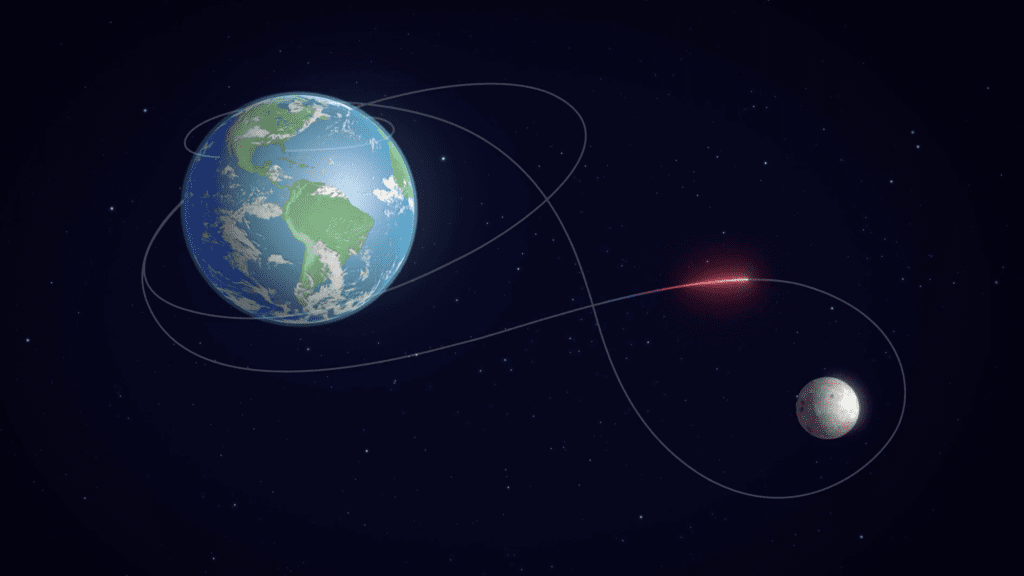
NASA’s Artemis II mission, launching no earlier than March 2026 (following recent wet dress rehearsal delays), will send four astronauts—Commander Reid Wiseman, Pilot Victor Glover, Mission Specialist Christina Koch, and CSA astronaut Jeremy Hansen—on a 10-day flyby around the Moon. It marks the first crewed lunar mission since Apollo 17.
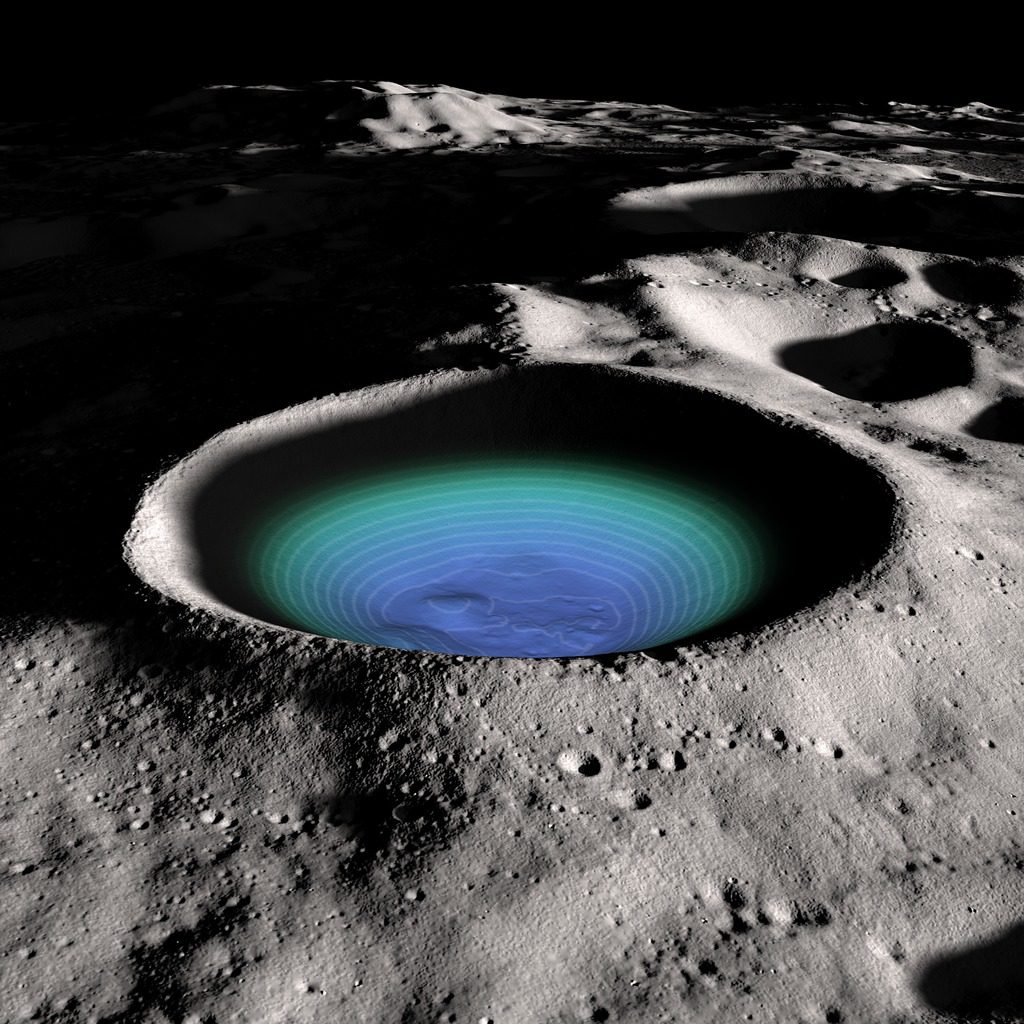
As the world watches the 2026 launch preparations, the hunt for Artemis II Lunar Anomalies centers entirely on the mysterious Shackleton Crater. While mainstream coverage highlights the historic crew and systems tests, our focus at Everything Unexplained zeros in on the lunar South Pole, where high-resolution imagery from past orbiters and fresh 2026 rumors point to unusual geometric patterns hidden within the permanently shadowed regions.
Key Takeaways
- The Mission: The upcoming crewed mission will use advanced optical targeting to investigate specific Artemis II Lunar Anomalies on the far side in unprecedented high-resolution.
- The Environment: Shackleton Crater’s interior stays in permanent darkness due to the Moon’s extremely low axial tilt, trapping extreme cold that preserves water ice—or hides something more unusual.
- The Evidence: Evidence of the anomalies suggests rumors of “non-natural geometric signatures” stem from older LRO and Kaguya data showing brighter floors and odd reflectivity, though mainstream science attributes this to ice or steep slope effects.
- The Politics: This flyby comes right after President Trump’s February 2026 UAP directive—raising immediate questions about whether live feeds will be scrubbed for anomalies.
- The South Pole Race: China’s Chang’e 7, targeting an August 2026 launch, aims for Shackleton’s illuminated rim for ice scouting with a lander, rover, and hopper. The obsession from both superpowers is unprecedented.
What Makes Shackleton Crater So Mysterious?
Shackleton sits precisely at the lunar South Pole. It is a 21-kilometer-wide impact crater with rims that catch near-constant sunlight while the floor remains in eternal shadow, with temperatures plummeting to -230°C or lower.
NASA’s Lunar Reconnaissance Orbiter (LRO) has mapped it extensively, revealing a brighter-than-average floor that early studies (such as the 2012 MIT/Brown analysis) linked to possible thin ice layers. But some interpretations go further. Radar reflections and neutron data hint at hydrogen concentrations consistent with volatiles, and a few fringe analyses spot linear or geometric anomalies in the shadowed edges that completely defy typical crater morphology.
Evidence of Artemis II Lunar Anomalies suggests no confirmed “structures” exist in official NASA releases—most experts explain the brightness via fresh regolith on steep slopes or frost deposits. Yet, persistent rumors (amplified in online aerospace forums and whistleblower-adjacent chatter) claim high-resolution 2020s orbiter shots show unnatural angles or patterns deep inside these PSRs (permanently shadowed regions). While Artemis II’s trajectory might not directly overfly the crater floor, the crew’s real-time observations and photography could capture edge details no human has seen up close in decades.
The Trump UAP Directive Connection: Will Feeds Get Delayed?
This mission is Artemis II’s first major outing since Trump’s February 19, 2026, directive ordering federal agencies to review and release UAP, UFO, and extraterrestrial files. With Pete Hegseth leading the Pentagon side of the review, major questions linger: Could NASA delay or alter live video feeds during the flyby to “scrub” anything anomalous near Shackleton?
Past missions (like the Apollo program) had no real-time public high-definition streams, but modern Artemis plans include massive bandwidth for live 4K coverage. If something geometric pops into frame during a shadowed rim shot, expect heavy public scrutiny—or quick edits citing sudden “technical glitches.”
Why Shackleton? The Superpower Race for the South Pole
Both the United States and China are fixated on this exact spot. NASA’s Artemis Base Camp concepts target nearby ridges for a sustained human presence, highly valuing the local ice for drinking water, rocket fuel, and breathable oxygen.
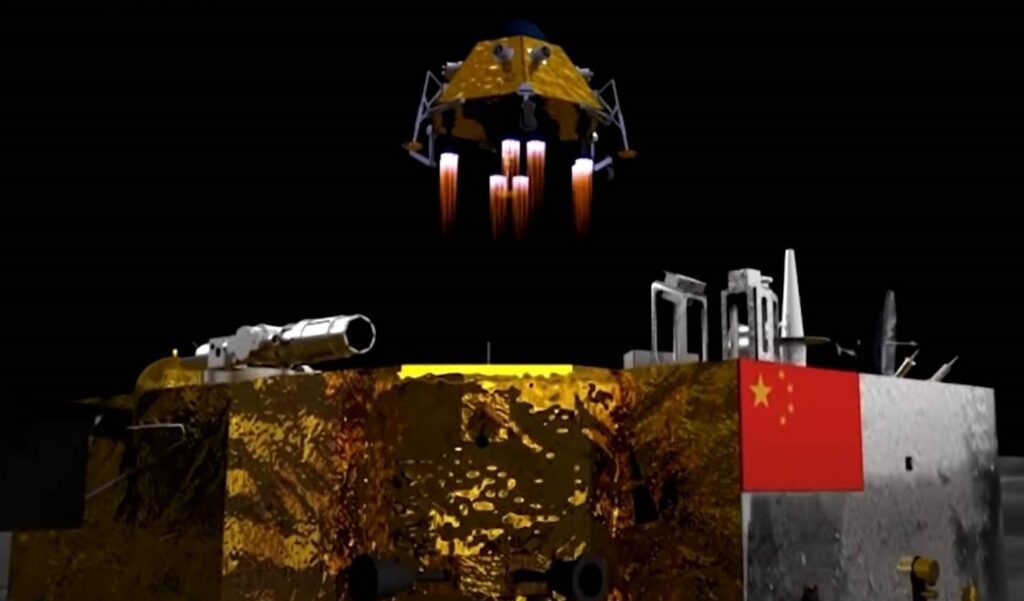
Meanwhile, China’s Chang’e 7 mission (slated for an August 2026 launch on a Long March 5 rocket) aims straight for Shackleton’s illuminated southeast rim. The payload is staggering: an orbiter for mapping, a lander and rover for surface work, and a unique mini-hopper probe designed to jump directly into the shadowed areas for direct ice and volatiles sampling. The crater’s rim offers near-constant solar power, while the PSRs promise preserved resources from billions of years ago.
Is it just practical science and an ice hunt for future bases? Or is something deeper drawing the eyes of the world’s militaries to one specific crater? The geopolitical race could reveal much more than water if the rumored Artemis II Lunar Anomalies finally surface.
Our Take in The Lab: Investigating Artemis II Lunar Anomalies
Cross-referencing the LRO’s high-reflectivity walls (consistent with ice frost per recent UV data) against older Japanese Kaguya morphology claims, the “geometric signatures” rumors often trace back to misread slope artifacts or boulder patterns.
However, if the 2026 orbiter data (either pre- or post-Artemis) shows sharper, non-fractal lines, it could radically shift the debate. The true information gain will happen in orbit: watch closely for the crew’s live descriptions of “unusual shadows” or reflectivity spikes. Those human eyes might catch exactly what the algorithms are programmed to miss.
FAQ
Will Artemis II Lunar Anomalies directly image Shackleton Crater’s interior? Unlikely full floor views—the flyby focuses far side, but trajectory-dependent glimpses of South Pole edges are possible.
Is there real evidence of artificial structures in Shackleton? No official confirmation—mainstream attributes features to natural ice, slopes, or regolith; rumors persist but lack hard proof.
Why are the U.S. and China both targeting Shackleton? Prime spot for ice resources (water/fuel), constant sunlight on rims for power, and science on ancient impacts—key for sustained lunar bases.
Could the Trump directive affect Artemis II data release? Possible indirect pressure for transparency, but NASA controls feeds; any “scrubbing” would spark immediate conspiracy talk.
What grabs you most—Artemis II Lunar Anomalies, the ice hunt, the race, or potential hidden structures? Share your thoughts in the comments. Got a lunar anomaly sighting? Submit via our form. Subscribe to the archive for more forensic deep dives into Sky & Space and the latest Artemis II Lunar Anomalies.
Sources: NASA.gov (Artemis II overview, crew details); SpaceNews/Space.com (Chang’e 7 targeting Shackleton); LRO/Kaguya scientific papers via PubMed/Science.org (Shackleton brightness/ice studies). Do follow links to primaries.