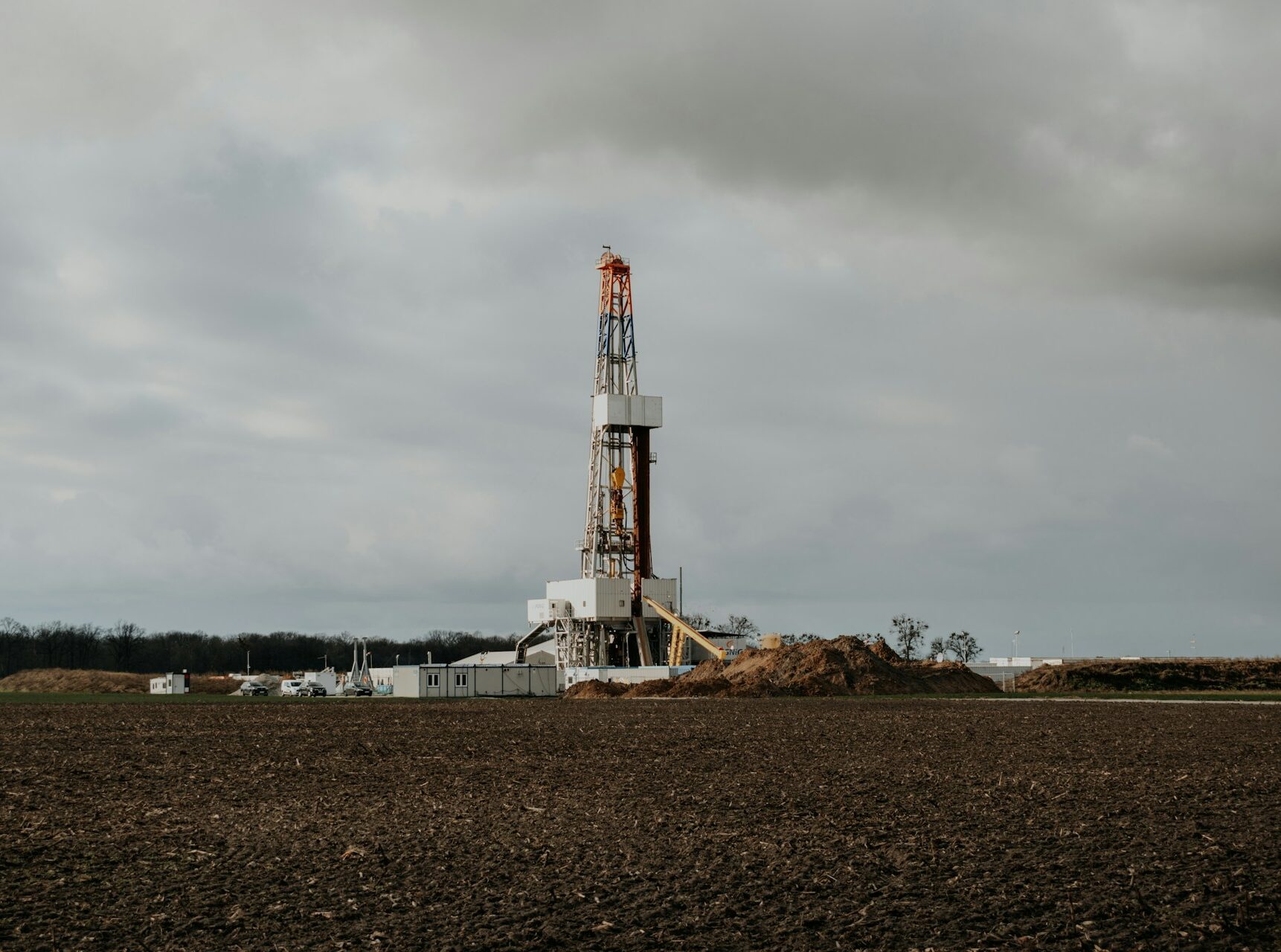
When investigating Mantle Breach Anomalies, the forensic timeline must begin in 1970, when the Soviet Union launched the Kola Superdeep Borehole project on the remote Kola Peninsula. Their objective was staggering: to drill 15 kilometers straight down into Earth’s crust to see what was actually down there. By 1989, they reached 12,262 meters (about 7.6 miles)—making it the deepest artificial hole ever created by humanity—before the planet violently forced them to stop.
While the “screams of hell” audio that circulates on amateur paranormal boards is a proven internet hoax, the real scientific findings were far more startling. At that depth, temperatures soared to around 180°C (356°F)—far hotter than any geological model predicted. Furthermore, the rock stopped behaving like solid stone. Under extreme pressure and heat, it transitioned into a plastic-like state, jamming the drill bits and literally oozing back in to seal the hole.
Key Takeaways
- The Kola Limit: The Kola borehole hit unexpected heat and plastic rock behavior, physically halting human progress miles short of the mantle.
- Seismic Mapping: Because we cannot drill deeper, we use seismic tomography to map the deep earth, revealing two continent-sized anomalies sitting directly atop the Earth’s core.
- The Deep Biosphere: The deep earth hosts “intraterrestrials”—extremophile microbes thriving miles underground, feeding on rock chemistry and radiation rather than sunlight.
- Violent Eruptions: Kimberlite pipes act as rapid, supersonic pressure-release valves, bringing pristine diamonds and mantle rock to the surface in a matter of hours.
- The Final Frontier: In 2026, we have mapped the surface of Mars with perfect clarity, yet we still haven’t pierced Earth’s Moho boundary to sample the pristine mantle.
The Kola Superdeep Borehole: Heat, Pressure, and Plastic Rock
Drilling began with an ambitious, almost arrogant goal: penetrate the Mohorovičić discontinuity (the Moho)—the precise boundary between the Earth’s crust and the mantle—and study deep geology directly. However, the Earth fought back.
At around 10 kilometers down, temperatures doubled all scientific predictions. By 12 kilometers, the 2.7-billion-year-old granite was behaving like viscous plastic under the crushing pressure, constantly warping, oozing shut, and wrecking heavy equipment. The project officially ended in 1992 due to these insurmountable technical limits. Yet, it proved that the deep crust was highly fractured and fluid-filled—far more dynamic than models expected. There are no supernatural horrors down there, just pure physics pushing the limits of human engineering.
Seismic Shadows: Mapping What We Can’t Reach
Since physical drilling stops short, modern geologists rely on seismic tomography to study Mantle Breach Anomalies. By tracking how earthquake waves bend, slow down, and accelerate through Earth’s internal layers, we can map the invisible.
This technique revealed the Large Low-Shear-Velocity Provinces (LLSVPs). These are two massive, continent-scale anomalies sitting deep beneath Africa and the Pacific Ocean, resting directly on the core-mantle boundary. These “blobs” slow down seismic shear waves significantly, suggesting they are made of denser, chemically distinct material. Recent 2025 and 2026 studies propose these LLSVPs might be the accumulated graveyard of ancient subducted oceanic crust, or even primordial residues left over from the formation of the planet. They are silent giants, influencing mantle convection and shaping our planet from the bottom up.

The Deep Biosphere: Life Where Sunlight Never Reaches
The most shocking forensic discovery regarding the deep earth is biological. Miles underground, trapped inside solid rock, life persists. We call them “intraterrestrials”—extremophile bacteria, archaea, and even complex nematodes that survive crushing pressure, a complete absence of light, and minimal nutrients.
Instead of photosynthesis, they metabolize rock minerals, hydrogen gas released from geological reactions, or even the energy from radioactive decay. A prime example is the radiation-loving Desulforudis audaxviator, discovered 2.8 kilometers deep in South African gold mines, feeding solely on pure geochemical energy. This subsurface biosphere rivals the entire ocean’s biomass in scale. Their cells divide incredibly slowly—sometimes over thousands of years—challenging our very definition of what it takes for life to thrive.
Our Take in The Lab: Investigating Mantle Breach Anomalies
What happens when the crushing pressure below finally overwhelms the crust above? You get kimberlite pipes. These are the most extreme Mantle Breach Anomalies on the planet.
Kimberlite pipes are narrow, carrot-shaped conduits that erupt from more than 150 kilometers deep. Driven by volatile-rich melts (highly concentrated carbon dioxide and water), they race to the surface in a matter of hours at supersonic speeds. They act as Earth’s violent pressure-relief valves, fragmenting the surrounding rock and carrying diamonds formed deep in the mantle straight to the surface.
Cross-referencing these brutal natural frontiers with cases like the freezing isolation of the Nahanni Valley, or comparing early human ingenuity like the Antikythera Mechanism against modern seismic scanning, highlights a humbling truth. We can map deep geological anomalies better than ever before, but successfully surviving or sampling them directly remains incredibly elusive.
The Final Frontier: Beneath Our Feet
We have imaged the entire surface of Mars and successfully landed probes on passing asteroids, but Earth’s mantle—which makes up a staggering 70% of our planet’s total volume—remains entirely untouched in situ.
The Moho boundary remains uncrossed. In 2026, seismic data and eDNA tools reveal more every day, but the greatest unknown alien world is directly below our boots—blisteringly hot, impossibly dense, and alive in entirely unexpected ways. The deep earth doesn’t need internet myths; the verified Mantle Breach Anomalies are terrifying and mysterious enough on their own.
FAQ
How deep is the Kola Superdeep Borehole really? It reaches exactly 12,262 meters (7.6 miles). It is the deepest human-made hole on Earth, but it still barely scratches the crust. Drilling stopped because temperatures reached 180°C and the rock turned into a plastic-like state.
What are LLSVPs and why do they matter? LLSVPs are massive, continent-sized low-velocity zones located at the core-mantle boundary. They are likely ancient subducted crust or primordial planetary material, and they heavily influence mantle flow and volcanic activity.
Is there really life miles underground inside solid rock? Yes. “Intraterrestrials” (microbes and nematodes) survive by feeding on rock chemistry and radiation. This deep biosphere is so vast it rivals surface biomass.
Do kimberlite pipes prove that Mantle Breach Anomalies happen? Yes. Kimberlite pipes are violent, rapid, supersonic eruptions that bring deep mantle samples (including diamonds) to the surface. They serve as the Earth’s natural pressure valves.
Will we ever successfully drill all the way to the mantle? Not yet. The Moho boundary remains uncrossed in 2026. The extreme heat, crushing pressure, and bizarre rock behavior physically stop our current drilling technology, though metallurgical advances continue slowly.
The deepest mystery isn’t deep space—it is directly beneath our boots. What are your thoughts on deep Earth life or these massive continent-sized anomalies? Share your theories in the comments below. Got a strange geological sighting or theory? Submit it securely via our Contact Lab form. Subscribe to the archive for more forensic deep dives into Earth Enigmas and Mantle Breach Anomalies.
Investigatively yours, Jamie Craig
Sources: International Continental Scientific Drilling Program | Nature Geoscience: Seismic Tomography and LLSVPs | Deep Carbon Observatory: The Deep Biosphere.